Showing posts with label books. Show all posts

Friday, July 19, 2013

So you wanna write a book

Thought leader.
Who doesn't?

I've got a couple of my own sitting around here somewhere. Don't worry: I'll remember you if you somehow crash my publishing party in a Fifth Avenue penthouse.

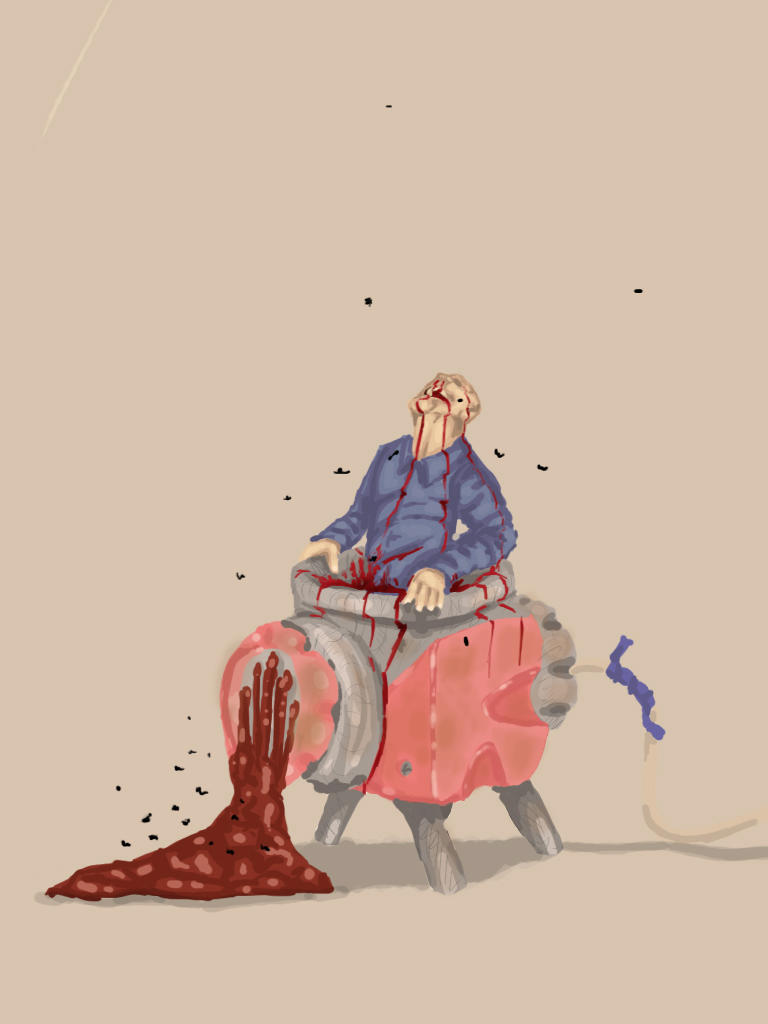
And I work with executives who want to write books. The first step in our collaboration: I jam one of their hands in a meat grinder and turn the crank.

If they enjoy that, we continue.

What most of them think is that to become a "thought leader," or just to attract more business, a book is the first step. It's a credential. It's true, I guess. Nobody will read the book, but that's not the point.

When I first got into the writing business I was an idealist. I really believed that as a journalist I was going to save the world. (You can decide if I succeeded.) Now that I'm writing mostly about business I think some of that idealism is useful.

When I was an editor at Reader's Digest I came up with the term "sincerity of purpose." That means that you aren't cynical when you put words on paper, that you are genuinely trying to help people. If you have that spirit you won't deliver trite junk or untruths. You will only deliver what you'd want: the best. You thereby create real value, which people will pay for.

I think Guy Kawasaki, the former "chief evangelist" at Apple, has written 12 books, including one about how to publish a book, agrees.

He writes that any wannabe author should stand in a bookstore and look at all the books. Would yours stand out? Why on earth would a reader/buyer choose your book? What's in it for the reader? However, most would-be writers focus on themselves when answering why they want to write.
Answers to this question include: “It’s good for my visibility.” “To make money.” “It will help me get speaking gigs and consulting engagements.” “It’s good for my company.” “It will make me a thought leader.” Any of these reasons may be true for the author, but they are not relevant for readers.
Think about this: How often do you peruse Barnes & Noble or Amazon while wondering how you can help an author achieve his or her personal goals? Your answer, like mine, is probably “never.” I’m happy for authors to earn lots of royalties, but that’s not why I buy their books. I’d bet the same is true for you, too. Let’s examine the good and bad reasons to write a book.
The rest of his piece is good material for anyone who wants to write. I will leave you with this one thought: it's all about what the reader wants or needs. It's not about you.

Monday, January 7, 2013

Is the book dead or not?

The old library. Good enough for me.
In my small town, the corner on Main Street where the library sits is wrapped in fabric fencing, shielding from view a major construction project to expand the building.

I suppose it's going to resemble the library in Darien, Connecticut, not too many miles away, which is an impressive, sprawling structure.

As I drove by the construction my taxes are funding I wondered: Why are they doing this if the paper book is dead? Are libraries, like any good bureaucracy, reinventing themselves to stay alive?

They're certainly trying. The State of Connecticut is pouring millions into library renovations.

Two articles in The Wall Street Journal get at this matter from two different angles.

Peter Mandel, a children's book author, has noticed how his library has morphed into something digital.
Remember library books? Prior to the iPad and Kindle, readers used to pore over these paper and cardboard rectangles, possibly savoring their musty smell, their cover art and typefaces. 
But take a peek around your local library. You'll see oceans of DVDs, CDs, copy machines and computer terminals, with customers queued up to take their turn with all this shared technology. Somewhere in the background—or more than likely exiled to the basement—are the stacks for book-browsing that we used to know.
Nicholas Carr, on the other hand, tells us paper book lovers not to worry.
Half a decade into the e-book revolution, though, the prognosis for traditional books is suddenly looking brighter. Hardcover books are displaying surprising resiliency. The growth in e-book sales is slowing markedly. And purchases of e-readers are actually shrinking, as consumers opt instead for multipurpose tablets. It may be that e-books, rather than replacing printed books, will ultimately serve a role more like that of audio books—a complement to traditional reading, not a substitute.

How attached are Americans to old-fashioned books? Just look at the results of a Pew Research Center survey released last month. The report showed that the percentage of adults who have read an e-book rose modestly over the past year, from 16% to 23%. But it also revealed that fully 89% of regular book readers said that they had read at least one printed book during the preceding 12 months. Only 30% reported reading even a single e-book in the past year.
Everything old is new again. So will DVDs or books fill my new library?