Monday, June 30, 2014

Follow the eyeballs to smart phones

If you want the widest possible arc for your writing I encourage you to consider those of us who read on our phones.

I do a good bit of my reading that way. I have a Samsung Galaxy III, which has now been outdated by two new generations. I suspect the reading may be even better on those.

I'm going to generalize from my practice that many people read this way. That's a fallacy, of course: proof by example. But I'm a journalist, and that's what we do.

Turns out my hasty generalization is on target.
While Amazon doesn't break out sales for its Kindle e-readers, it's in the process of launching its first smartphone. The company has a lot of reasons for this, but the fact that more and more people are reading ebooks on their phones is likely a factor.
The device that's really killing the e-reader market is the smartphone. 
A Pew report from 2012 found that 29% of readers of e-books consume them on their phones. Now that bigger screens are the trend — the next iPhone is expected to have 4.7- and 5.5-inch screens vs. today's 4.1 inches — we can expect even more phone-based reading.
Just make sure everything you publish reads well on a smart phone. Some sites I'd like to visit haven't caught on to this yet. So I don't like to visit them.

Tuesday, June 24, 2014

The patron saint of bored audiences

Monday morning meeting.
Think your boss invented long, boring speeches? Consider the story of Eutychus, as related in the New Testament book of Acts.
On the first day of the week we came together to break bread. Paul spoke to the people and, because he intended to leave the next day, kept on talking until midnight. There were many lamps in the upstairs room where we were meeting. Seated in a window was a young man named Eutychus, who was sinking into a deep sleep as Paul talked on and on. When he was sound asleep, he fell to the ground from the third story and was picked up dead. Paul went down, threw himself on the young man and put his arms around him. “Don’t be alarmed,” he said. “He’s alive!” Then he went upstairs again and broke bread and ate. After talking until daylight, he left. The people took the young man home alive and were greatly comforted.
Oh dear. Even the great preacher Paul managed to lose them. Let this be a cautionary tale.

This information comes from a blog, St. Eutychus, authored by Nathan Campbell, who is studying for the ministry in Australia.
I’ve decided to canonise Eutychus and make him the patron saint of both my dalliances around the Internet, and clear and non-boring communication. Look. I don’t think Paul was boring – quite the reverse. But the story is funny, and it’s funny that Eutychus will forever be remembered as the guy who fell asleep while arguably the second most influential preacher of all time was speaking.
Campbell used to be in public relations. Now he's in the ministry. I will let you take what meaning you need to from that.

Monday, June 23, 2014

This is very important: how to not use "very"

"Substitute ‘damn’ every time you’re inclined to write ‘very;’ your editor will delete it and the writing will be just as it should be." ~ Mark Twain

It seems this word very once meant truthful. That was back in the 13th Century, when people didn't have anything better to do than use words correctly.

If you think of verily and verify, you get the original idea.

Somewhere along the line, it came to mean grievous or extreme. Somebody should be held to account for this switcheroo.

Is there is a life after very? Why, yes. We're just too lazy to discover it.

Amanda Patterson offers a helpful chart for those who wish to banish this most useless of words. Print this out and tape it to your computer.


We need no proof that good usage has practical value, but hear the words of author Nancy H. Kleinbaum: "So avoid using the word very because it’s lazy. A man is not very tired, he is exhausted. Don’t use very sad, use morose. Language was invented for one reason, boys -- to woo women -- and, in that endeavor, laziness will not do."

Thursday, June 19, 2014

Should you go with the flow?

Flow.
It's hard enough to write without having to worry about whether you're "in the zone" or "in the flow." If you're fretting that, you're doing it wrong.

The concept of flow is quite real, but it has a specific meaning. It's not some blast of inspiration from above. Wait for that to write and you'll slip from this life at your keyboard, covered in cobwebs.

The chap who came up with this concept is a Hungarian psychologist with an impossible name -- Mihaly Csikszentmihalyi (pronounced Cheek-sent-muh-hy-ee). Here's how he sees it:
According to Csikszentmihalyi, flow is completely focused motivation. It is a single-minded immersion and represents perhaps the ultimate experience in harnessing the emotions in the service of performing and learning. In flow, the emotions are not just contained and channeled, but positive, energized, and aligned with the task at hand. The hallmark of flow is a feeling of spontaneous joy, even rapture, while performing a task although flow is also described (below) as a deep focus on nothing but the activity – not even oneself or one's emotions.
To achieve flow it is suggested that:
  • One must be involved in an activity with a clear set of goals and progress. This adds direction and structure to the task.
  • The task at hand must have clear and immediate feedback. This helps the person negotiate any changing demands and allows them to adjust their performance to maintain the flow state.
  • One must have a good balance between the perceived challenges of the task at hand and their own perceived skills. One must have confidence in one's ability to complete the task at hand.
One writer suggests:
Perhaps the two most important ingredients for flow are motivation and ability in the person. If you can’t paint worth a lick, no amount of motivation will let you abandon conscious effort, because you just aren’t good enough. Conversely, a world-class author won’t produce anything of value if she has no desire to even sit at the computer, let alone write. The more you have of both, the easier reaching flow becomes.
The lesson, then, is to discover where what you love doing overlaps what you are capable of doing well.

More insight for writers comes from Romanian journalist Simina Mistreanu, who interviewed seven award-winning journalists and came up with this insights:
Reporting and being part of other people’s lives triggers flow. These journalists find purpose in shedding light onto difficult, often heart-wrenching issues. That connection — between mission and joy — was echoed by the seven accomplished writers who use longform narratives to cover sensitive social issues. 
I don't know that Csikszentmihalyi explicitly included a sense of mission as necessary for flow. It makes sense, however, in that how a writer views his work informs his passion and motivation. In other words, his writing has meaning.

In the end, the only way to find your zone is to sit down and start writing. "I write when I'm inspired," Peter De Vries said, "and see to it that I'm inspired at nine o'clock every morning."

Monday, June 9, 2014

What to ask yourself before you write

I have a bad habit of jumping into a piece to see what happens, with nary a thought up front. I don't recommend it. Do as I say, not as I do.

A good place to start thinking about what you want to write is the five fundamental questions (here and here).

Closely related to these questions, and perhaps their ancestor, is the concept of stasis. The term stasis means a state of equilibrium. Allen Brizee at Purdue University explains:
Stasis theory is a four-question, pre-writing (invention) process developed in ancient Greece by Aristotle and Hermagoras. Later, the stases were refined by Roman rhetoricians, such as Cicero, Quintilian, and Hermogenes. Working through the four stasis questions encourages knowledge building that is important for research, writing, and for working in teams. Stasis theory helps writers conduct critical analyses of the issues they are investigating.
Specifically, stasis theory asks writers to investigate and try to determine:
  • The facts (conjecture)
  • The meaning or nature of the issue (definition)
  • The seriousness of the issue (quality)
  • The plan of action (policy)
Brizee suggests a number of questions to ask under each category. Worth a look. 
It is important to achieve stasis with the issue you are investigating. Put another way, if you are trying to solve the parking problem on your campus, it will not do anyone any good to suggest that students stop smoking. The solution has nothing to do with (does not achieve stasis with) the issue at hand.
It might be instructive to examine the next journal article you read for evidence that the writer has asked these critical questions.

Wednesday, June 4, 2014

They don't hear a single fact you throw at them

Your audience.
Our writing and speaking are usually an attempt to persuade people that something is true or that they ought to do something.

It's harder than we think. We tend to throw facts at our audience, and that's probably the least effective thing we can do.

People don't let facts get in the way of a good belief.

Brendan Nyhan, a professor of political science at Dartmouth, has been looking into this, and what he's learning has relevance for anyone writing in business. Maria Konnikova summarizes in The New Yorker:
If information doesn’t square with someone’s prior beliefs, he discards the beliefs if they’re weak and discards the information if the beliefs are strong. 
Here's a crucial distinction:
When there’s no immediate threat to our understanding of the world, we change our beliefs. It’s when that change contradicts something we’ve long held as important that problems occur.
It's easy to see this in an historical context.
Take astronomy. If someone asked you to explain the relationship between the Earth and the sun, you might say something wrong: perhaps that the sun rotates around the Earth, rising in the east and setting in the west. A friend who understands astronomy may correct you. It’s no big deal; you simply change your belief.
But imagine living in the time of Galileo, when understandings of the Earth-sun relationship were completely different, and when that view was tied closely to ideas of the nature of the world, the self, and religion. What would happen if Galileo tried to correct your belief? The process isn’t nearly as simple. The crucial difference between then and now, of course, is the importance of the misperception.
Think of the controversies today: global warming, vaccination, raw milk, on and on. You won't get very far throwing facts at these issues.

When people feel their sense of self threatened by the outside world, they are strongly motivated to correct the misperception, be it by reasoning away the inconsistency or by modifying their behavior, Konnikova writes. 
To address this one researcher proposes an exercise in self-affirmation: either write down or say aloud positive moments from your past that reaffirm your sense of self and are related to the threat in question. Research suggests that affirmation makes people far more resilient and high performing, be it on an S.A.T., an I.Q. test, or at a book-club meeting.
In this way a person's identity is less threatened by the issue.

It's also possible to approach issues in a neutral way. Why unnecessarily drag identifications into a matter? For example, the danger of smoking isn't Republican or Democratic. So why make it so?

What are the core beliefs of your audience? What are you planning to write or say that might threaten those beliefs? Is it absolutely necessary to go there? Or can you elevate your words to a larger identity that encompasses everyone?

Wednesday, May 28, 2014

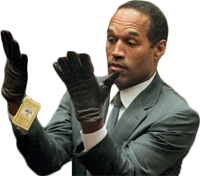
When the glove didn't fit

The power of rhyme.
Johnnie Cochran, the defense attorney who got O.J. Simpson acquitted of murder, told the jury:

"Remember these words:
If it doesn't fit, you must acquit."

For emphasis he said, "Remember these words." But that wasn't necessary. Most everyone remembers them to this day.

Rhyme has a special effect on our brains. It's called the "rhyme as reason" effect, or "the Keats Heuristic" after the poet. Various experiments have shown that people judge a saying or aphorism as more accurate or truthful when it rhymes. It also works in advertising and in product names.

Consider:
One if by land, two if by sea. And I on the opposite shore will be.
Hey, hey, L.B.J., how many kids did you kill today?
It takes a licking but keeps on ticking.
When you need an edge, use Pledge.
Lean Cuisine, Reese’s Pieces, Ronald McDonald
The power of rhyme is perhaps why we use it so often with little children. The babies of pregnant women who read "The Cat in the Hat" by Dr. Seuss repeatedly during their last trimester recognized the verse when they were born, distinguishing it from verse that didn't rhyme.

Why is rhyme so pleasurable?
One theory is that humans like anything that purifies the basics of their world and that resonates with the way the brain decodes the blooming, buzzing confusion out there. We like stripes and plaids, we like periodic and harmonic sounds and we like rhymes.
We don't have to work so hard to understand rhyme.
This gives the phrase what psychologists call "fluency." Research in this area tends to point to the fact that messages that are more fluent are not only more memorable, they’re also perceived as being truer. They’re memorable because they are processed more easily. That ease of processing makes them easier to recall. And of course, messages that you can actually remember are much easier to spread to others.
People are more likely to accept a proposition they don't believe if it's presented in rhyme, says Matthew McGlone, Ph.D., a psychologist at Lafayette College in Pennsylvania. Asked whether financial success makes people healthier, almost all of McGlone's subjects disagreed, but "wealth makes health" seemed much more plausible.

Occasionally, rhyme has the opposite effect, however. "It will backfire when an audience has reason to be suspicious of the speaker," McGlone says. "
For instance, Cochran's "if the glove doesn't fit'"line was treated as a rallying cry by African-American newspapers, but as a gimmick by the mainstream press, which for the most part portrayed Cochran as a huckster from the beginning of the trial." Suspicion,  McGlone explains, provides the motivation to scrutinize a message more closely -- and to make sure it's as pleasing to the intellect as it is to the ear.
Cochran was a successful, wealthy and flamboyant lawyer who liked to say that he worked "not only for the OJs, but also the No Js". Another member of Simpson's "Dream Team" of lawyers was Gerald Uelmen, who came up with the glove doesn't fit phrase, which Cochran borrowed.

If you wish to incorporate rhyme in your speaking or writing, remember that Cochran was a showman. It was in character for him to do this. Moreover, the glove was a central part of the case; the rhyme was not manufactured and forced to fit. As it were.