Showing posts with label rules for wriing. Show all posts

Wednesday, October 2, 2013

Before you write, listen to these professors

Harvard economics professors Claudia Goldin and Lawrence Katz offer advice to students on writing. Their guidelines apply to anyone in business.

Rule #1: You will probably not have a Nobel Prize winning idea.
Theorem #1: It is always possible to transform a good idea into a great paper and a superb
presentation. 
Theorem #2: Even if your idea is Nobel-worthy, you can always make it into a poorly written paper and a lousy presentation. This theorem will probably never be needed; see Rule #1.
Rule #2: The insights of your paper will first be judged by how you present them. If your paper is written in an unprofessional manner, your empirical work, mathematical proofs, and models will be viewed with initial skepticism.

Rule #3: Your paper is an exercise in persuasion. Your readers are your audience. They have better things to do than read your paper. Make them interested in your thesis and convinced of your argument. 

Rule #4: No great paper—no matter how well constructed, brilliant, and well written—first emerged from the author’s printer in that form. It was rewritten at least 10 times. Rewriting is the true art of writing. 

Rule #5: No author—no matter how careful and humble—can see all (or even most) of his or her writing errors. Trade papers with another student. Be tough; there will be some initial pain, but gratitude will follow. 

Rule #6: Most paragraphs have too many sentences and most sentences have too many words. Repetition is boring. We repeat: repetition is boring. Cut, cut, and then cut again.

Rule #7: Verbalizing your argument is more difficult than writing it. Giving a presentation will reveal where your argument falls flat and will show you how to redraft the paper. Give many presentations before sending out your paper. Give them to a workshop, friends, a dog or cat, even the wall. The presentation will force you to confront inconsistencies in your argument.

Wednesday, May 1, 2013

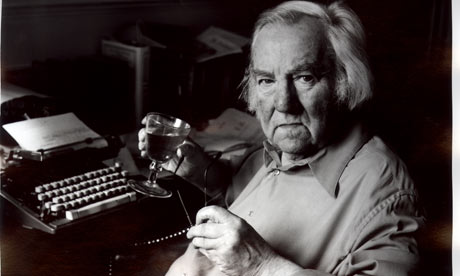
Keith Waterhouse's excellent rules for writing

Keith Waterhouse.
English novelist and newspaper columnist Keith Waterhouse (1929-2009) was a prolific writer: 16 novels, countless plays and film scripts, and, for almost 40 years, a twice-weekly newspaper column.

In his book, Waterhouse on Newspaper Style, now back in print in both the U.S. and the U.K. At the end of the book, Waterhouse summarizes a number of his key points with these "ground rules" for writers. Richard Nordquist lists them on his blog:
  1. Use specific words (red and blue) not general ones (brightly coloured).
  2. Use concrete words (rain, fog) rather than abstract ones (bad weather).
  3. Use plain words (began, said, end) not college-educated ones (commenced, stated, termination).
  4. Use positive words (he was poor) not negative ones (he was not rich -- the reader at once wants to know, how not rich was he?).
  5. Don't overstate: fell is starker than plunged.
  6. Don't lard the story with emotive or "dramatic" words (astonishing, staggering, sensational, shock).
  7. Avoid non-working words that cluster together like derelicts (but for the fact that, the question as to whether, there is no doubt that).
  8. Don't use words thoughtlessly. (Waiting ambulances don't rush victims to hospital. Waiting ambulances wait. Meteors fall, so there can be no meteoric rise.)
  9. Don't use unknown quantities (very, really, truly, quite. How much is very?).
  10. Never qualify absolutes. A thing cannot be quite impossible, glaringly obvious or most essential, any more than it can be absolutely absolute.
  11. Don't use jargon, clichés, puns, elegant or inelegant variations, or inexact synonyms (BRAVE WIFE DIED SAVING HER SON is wrong; wife is not a synonym for mother).
  12. Words are facts. Check them (spelling and meaning) as you would any other.

Monday, January 21, 2013

Advice from Kurt Vonnegut

Several of Kurt Vonnegut's eight rules for writing apply when we're writing at work.


Keep It Simple
As for your use of language: Remember that two great masters of language, William shakespeare and James Joyce, wrote sentences which were almost childlike when their subjects were most profound. ‘To be or not to be?’ asks Shakespeare’s Hamlet. The longest word is three letters long. Joyce, when he was frisky, could put together a sentence as intricate and as glittering as a necklace for Cleopatra, but my favorite sentence in his short story ‘Eveline’ is just this one: ‘She was tired.’ At that point in the story, no other words could break the heart of a reader as those three words do. 
Simplicity of language is not only reputable, but perhaps even sacred. The Bible opens with a sentence well within the writing skills of a lively fourteen-year-old: ‘In the beginning God created the heaven and earth.’
Have the Guts to Cut
It may be that you, too, are capable of making necklaces for Cleopatra, so to speak. But your eloquence should be the servant of the ideas in your head. Your rule might be this: If a sentence, no matter how excellent, does not illuminate your subject in some new and useful way, scratch it out.
Pity the Readers
Readers have to identify thousands of little marks on paper, and make sense of them immediately. They have to read, an art so difficult that most people don’t really master it even after having studied it all through grade school and high school — twelve long years. 
So this discussion must finally acknowledge that our stylistic options as writers are neither numerous nor glamorous, since our readers are bound to be such imperfect artists. Our audience requires us to be sympathetic and patient teachers, ever willing to simplify and clarify, whereas we would rather soar high above the crowd, sining like nightingales.

Monday, October 1, 2012

Neil Gaiman's eight rules for writing

Author Neil Gaiman offers these rules for writing.
  1. Write 
  2. Put one word after another. Find the right word, put it down. 
  3. Finish what you're writing. Whatever you have to do to finish it, finish it. 
  4. Put it aside. Read it pretending you've never read it before. Show it to friends whose opinion you respect and who like the kind of thing that this is. 
  5. Remember: when people tell you something's wrong or doesn't work for them, they are almost always right. When they tell you exactly what they think is wrong and how to fix it, they are almost always wrong. 
  6. Fix it. Remember that, sooner or later, before it ever reaches perfection, you will have to let it go and move on and start to write the next thing. Perfection is like chasing the horizon. Keep moving. 
  7. Laugh at your own jokes. 
  8. The main rule of writing is that if you do it with enough assurance and confidence, you're allowed to do whatever you like. (That may be a rule for life as well as for writing. But it's definitely true for writing.) So write your story as it needs to be written. Write it ­honestly, and tell it as best you can. I'm not sure that there are any other rules. Not ones that matter. 

Thursday, September 20, 2012

Elmore Leonard's 10 rules of writing

1. Never open a book with weather. If it's only to create atmosphere, and not a charac­ter's reaction to the weather, you don't want to go on too long. The reader is apt to leaf ahead look­ing for people. There are exceptions. If you happen to be Barry Lopez, who has more ways than an Eskimo to describe ice and snow in his book Arctic Dreams, you can do all the weather reporting you want.

2. Avoid prologues: they can be ­annoying, especially a prologue ­following an introduction that comes after a foreword. But these are ordinarily found in non-fiction. A prologue in a novel is backstory, and you can drop it in anywhere you want. There is a prologue in John Steinbeck's Sweet Thursday, but it's OK because a character in the book makes the point of what my rules are all about. He says: "I like a lot of talk in a book and I don't like to have nobody tell me what the guy that's talking looks like. I want to figure out what he looks like from the way he talks."

3. Never use a verb other than "said" to carry dialogue. The line of dialogue belongs to the character; the verb is the writer sticking his nose in. But "said" is far less intrusive than "grumbled", "gasped", "cautioned", "lied". I once noticed Mary McCarthy ending a line of dialogue with "she asseverated" and had to stop reading and go to the dictionary.

4. Never use an adverb to modify the verb "said" ... he admonished gravely. To use an adverb this way (or almost any way) is a mortal sin. The writer is now exposing himself in earnest, using a word that distracts and can interrupt the rhythm of the exchange. I have a character in one of my books tell how she used to write historical romances "full of rape and adverbs".

5. Keep your exclamation points ­under control. You are allowed no more than two or three per 100,000 words of prose. If you have the knack of playing with exclaimers the way Tom Wolfe does, you can throw them in by the handful.

6. Never use the words "suddenly" or "all hell broke loose". This rule doesn't require an explanation. I have noticed that writers who use "suddenly" tend to exercise less control in the application of exclamation points.

7. Use regional dialect, patois, sparingly. Once you start spelling words in dialogue phonetically and loading the page with apos­trophes, you won't be able to stop. Notice the way Annie Proulx captures the flavour of Wyoming voices in her book of short stories Close Range.

8. Avoid detailed descriptions of characters, which Steinbeck covered. In Ernest Hemingway's "Hills Like White Elephants", what do the "Ameri­can and the girl with him" look like? "She had taken off her hat and put it on the table." That's the only reference to a physical description in the story.

9. Don't go into great detail describing places and things, unless you'reMargaret Atwood and can paint scenes with language. You don't want descriptions that bring the action, the flow of the story, to a standstill.

10. Try to leave out the part that readers tend to skip. Think of what you skip reading a novel: thick paragraphs of prose you can see have too many words in them.

My most important rule is one that sums up the 10: if it sounds like writing, I rewrite it.

Wednesday, September 19, 2012

George Orwell's rules for writing

  1. Never use a metaphor, simile, or other figure of speech which you are used to seeing in print.
  2. Never use a long word where a short one will do.
  3. If it is possible to cut a word out, always cut it out.
  4. Never use the passive where you can use the active.
  5. Never use a foreign phrase, a scientific word, or a jargon word if you can think of an everyday English equivalent.
  6. Break any of these rules sooner than say anything outright barbarous.

Monday, September 10, 2012

Some tips on the writing craft


Mary Jaksch, Chief Editor of Write to Done, offers these.

Use simple, declarative sentences.
Avoid passive voice.
Limit your use of adjectives and adverbs.
Keep it simple.
Cut the crap.
Don’t overwrite.
Go easy on descriptive narrative (settings, people, etc.).
Re-examine every word that’s three syllables or longer and see whether it could be replaced by a simpler word.
If you have a sense of where you want your piece to wind up, start there instead and see what happens.
Avoid these three weak words – unless absolutely necessary: Ifs, Buts, and Can’ts.
Never rescue your hero.
Practice monotasking. Set a timer for uninterrupted writing.
Work on brilliant headlines.
Start with metaphors and stories.
Write the opening sentence or headline last.
Write solely from the heart and shun copying others.
Think before you include an expletive.
Ask, “Can it be turned into a list?” Think of at least five things you can list about it.
Use the mini-skirt rule: Make it long enough to cover everything, but short enough to keep it interesting.
Write in small paragraphs in order to get to the point immediately.
Visualize the person you are communicating with: What do their eyes reflect as they read this? What will the first thing they might say in response?
Do what works for you.
Always call a spade a spade. It’s never a long-handled gardening implement!
Try writing without accuracy. Not worrying about errors (left brain) allows for easier flow of thought (right brain).